Home / Emergency Preparedness
Emergency preparedness
Simple steps to help your household manage for three days if a storm or a power cut disrupts normal life. Start with our booklet, then watch the short videos below.
Simple steps to help your household manage for three days if a storm or a power cut disrupts normal life. Start with our booklet, then watch the short videos below.
Our guide takes you through planning for an emergency at home, with suggested supplies for a family of four and what to pack if you need to leave in a hurry. It's a general guide, so read it alongside your government's official advice, such as Be Ready in the UK.
In October 2026 the UK government launched Be Ready, its advice to households on getting through an emergency. It asks everyone to be ready to manage for three days, so you can cope while support reaches those most in need. France, Ireland and the Netherlands give the same advice.
Our booklet and short videos take you through it one topic at a time. You don't need to buy everything at once, and you probably have some of it at home already.

Source: Cabinet Office, UK Public Survey of Risk Perception, Resilience and Preparedness 2026 (official statistics in development).
Check your cupboards first. You probably have some of what you need.
Note down what you still need, including things your family relies on such as medicines, baby formula or pet food.
Pick up a missing item or two on your regular shop to spread the cost.
Swap out anything near its expiry date, and update your supplies if your household's needs change.
Swap contact details and agree what you could share during an outage.
Keep 3 litres of bottled drinking water per person per day, for three days. That is 9 litres each, or 36 litres for a family of four. You will need more for cooking and washing.

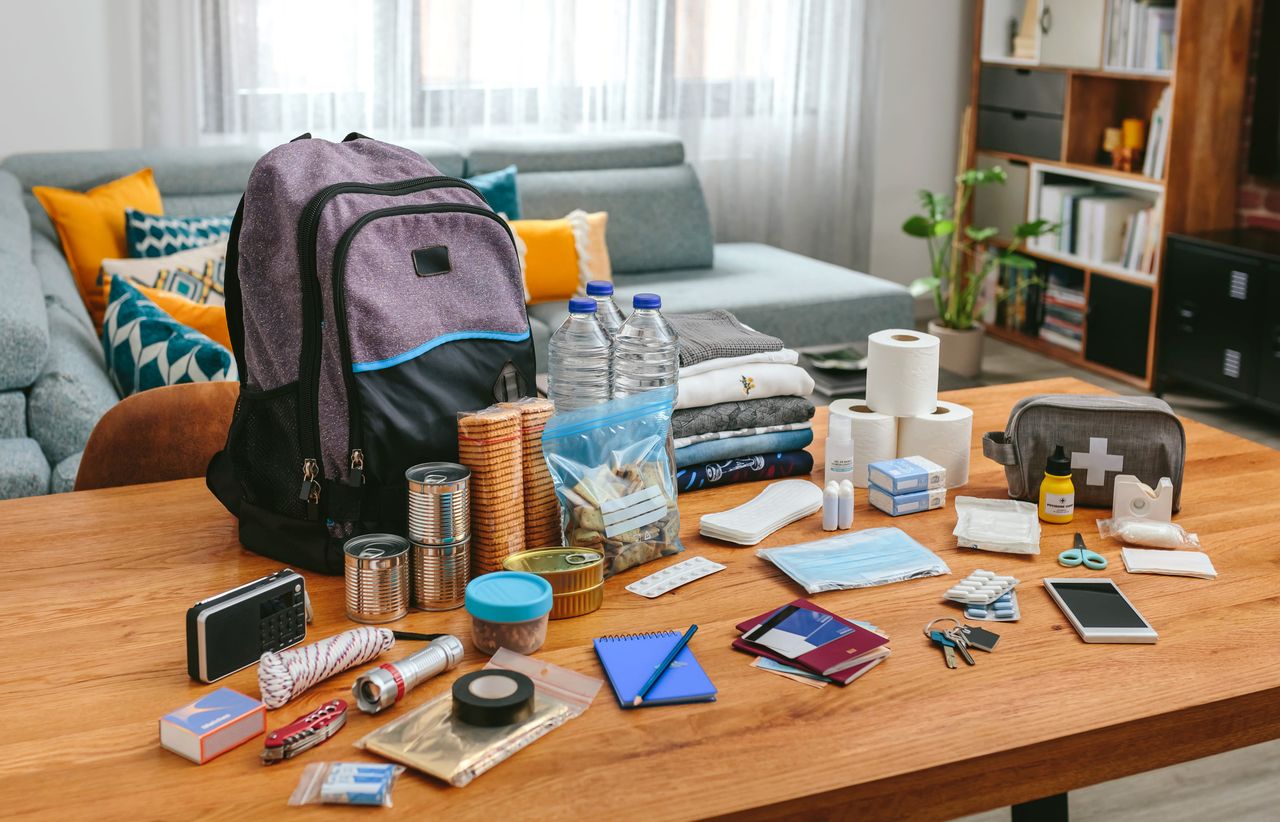
Keep enough food for three days that doesn't need a fridge or cooking, such as tinned meat, fish or vegetables, dried fruit and nuts. It's best to buy food your household already eats.

Report a power cut by calling 105 for free in England, Scotland and Wales, or 03457 643643 in Northern Ireland.
Source: Be Ready: power cuts

Good hygiene stops infections spreading when clean water and normal services are disrupted.

A few first aid skills mean you can help someone until professional help arrives.

Make sure you have the medicines and medical supplies your household relies on.
Source: Be Ready and NHS 111

If an emergency happens outside, go in, stay in and tune in. If it is inside, get out, stay out and ring 999.
Source: GOV.UK Emergency Alerts

Emergencies are stressful, and children pick up on how the adults around them are reacting.
Source: Be Ready: coping with trauma
The government's printable checklist and household emergency plan are free to download. The plan asks for contact details, so keep your copy somewhere private at home.
Preptracker is a free app, sponsored by Humanity First, that turns what you already have at home into one clear number. You don't need an account, it works offline, and it's available on iPhone and Android in seven languages.

Governments across Europe have sent households similar advice in the last two years. Sweden and Norway ask for a week, and Germany suggests 10 days if you can. Some booklets, such as Sweden's, talk openly about war, while the UK's advice focuses on everyday emergencies like storms and power cuts. The basics are the same everywhere.
Download our booklet, print it and keep it with your household plan, so you have it when the power or internet is down.