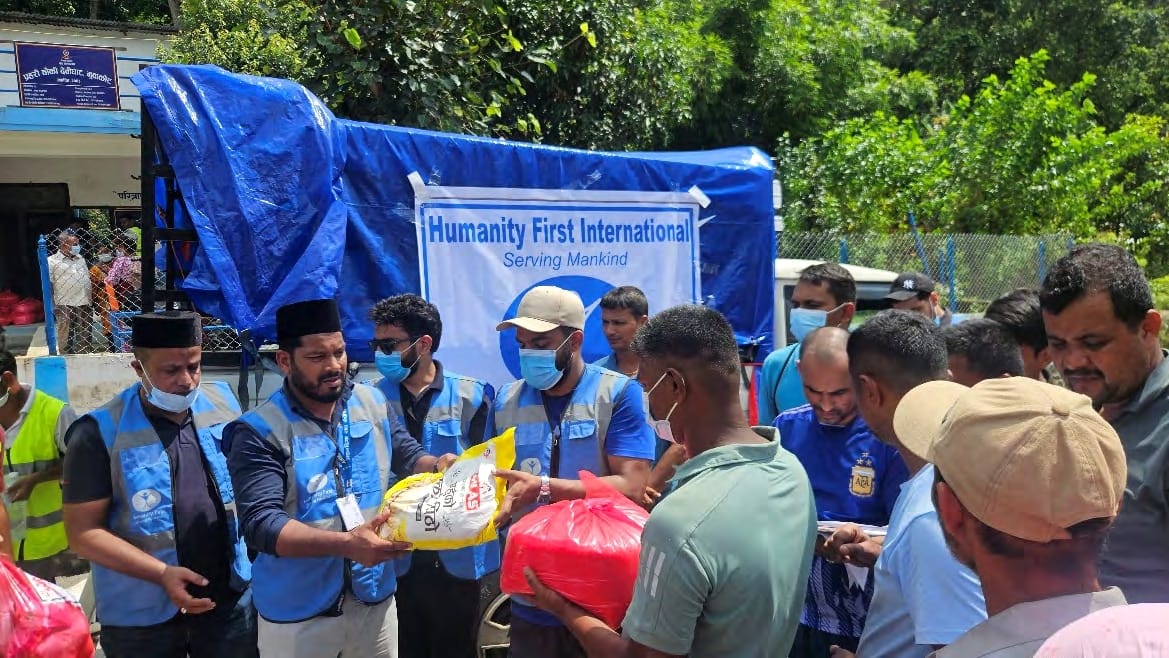
Between 3 and 10 September, a Humanity First team from India worked with local volunteers in Nepal to bring food and medical care to 200 families hit by August’s flood. The work covered Dhading and Nuwakot, two districts on the Trishuli river downstream of where the Bhote Koshi disaster began.
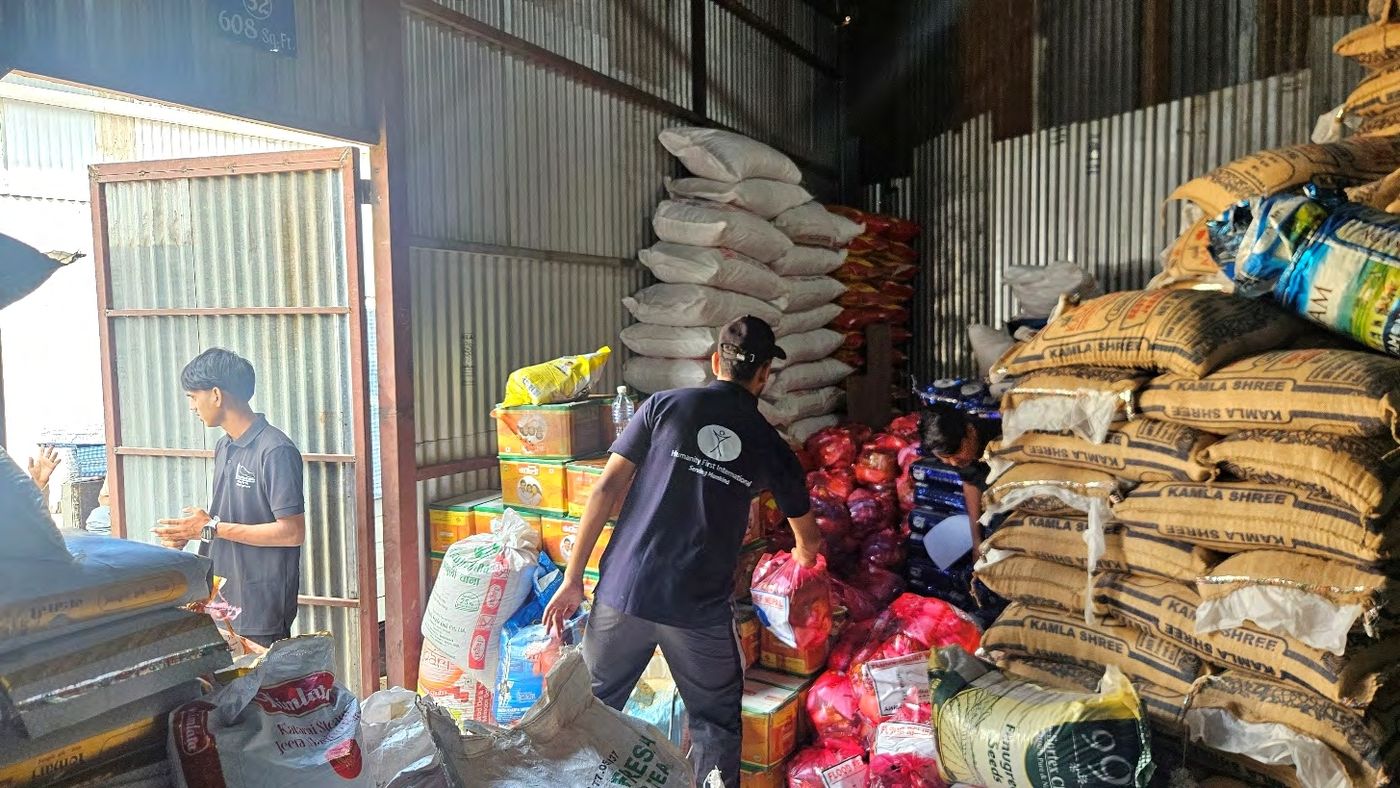
Over those eight days the team handed out 200 food kits and 200 medical and hygiene kits. They also ran a community kitchen and a free medical camp, and volunteers spent three days clearing debris from damaged homes.
Food for 200 families
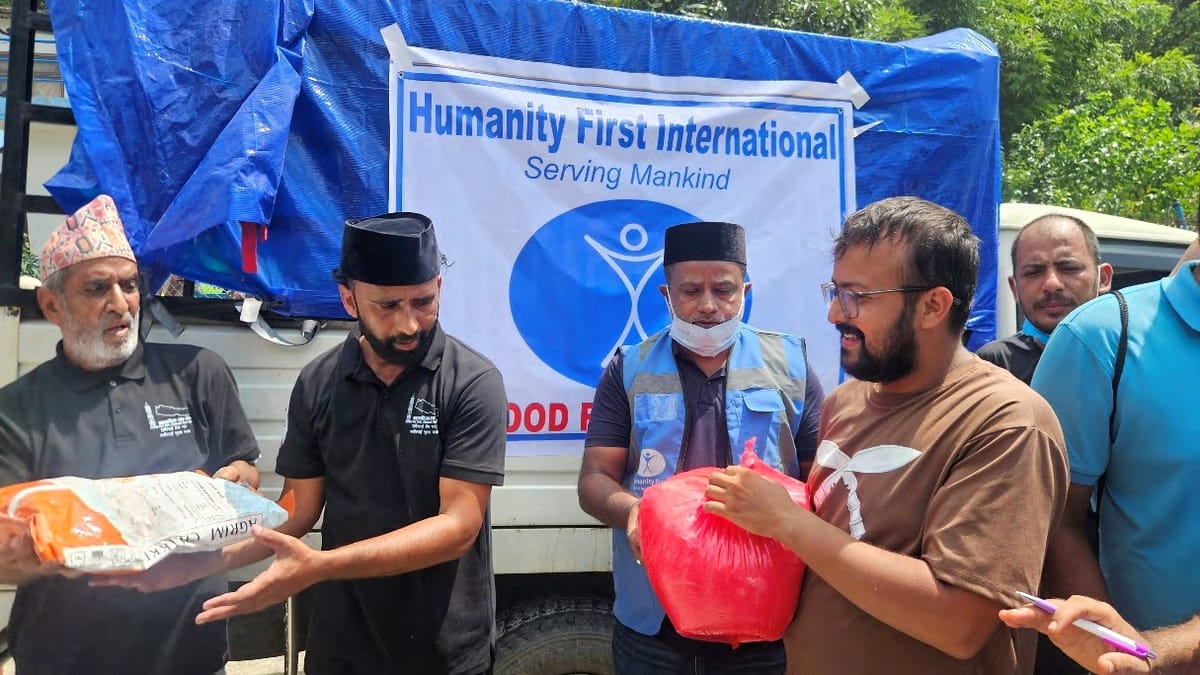
Each kit held rice, flour, lentils, sugar, cooking oil, noodles, salt, spices and biscuits. The local authorities pointed us to the hardest-hit households: 70 kits went to families in Dhading and 130 to families around Trishuli and Devighat in Nuwakot. Police and local government officials were present at the distributions.
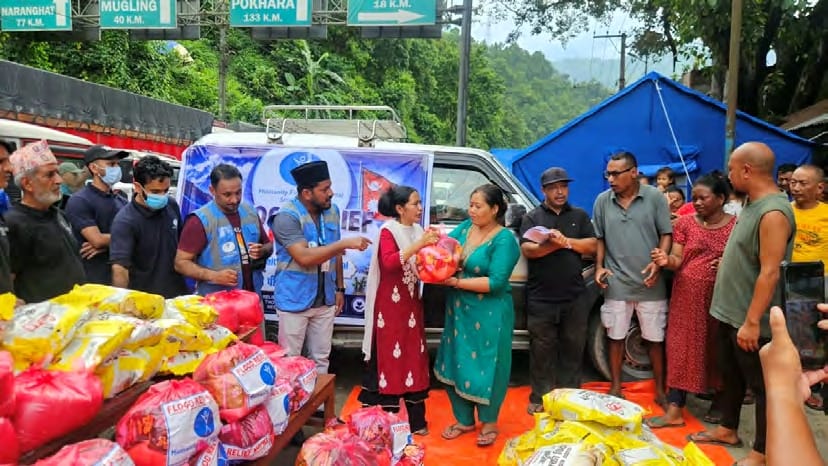
One distribution in Dhading had an unplanned visitor. A member of Nepal’s federal parliament was passing along the road with her convoy when she saw what was going on. She stopped her car and came over to ask who we were. Before leaving, she handed kits to a few of the families herself.
A kitchen where cooking was impossible
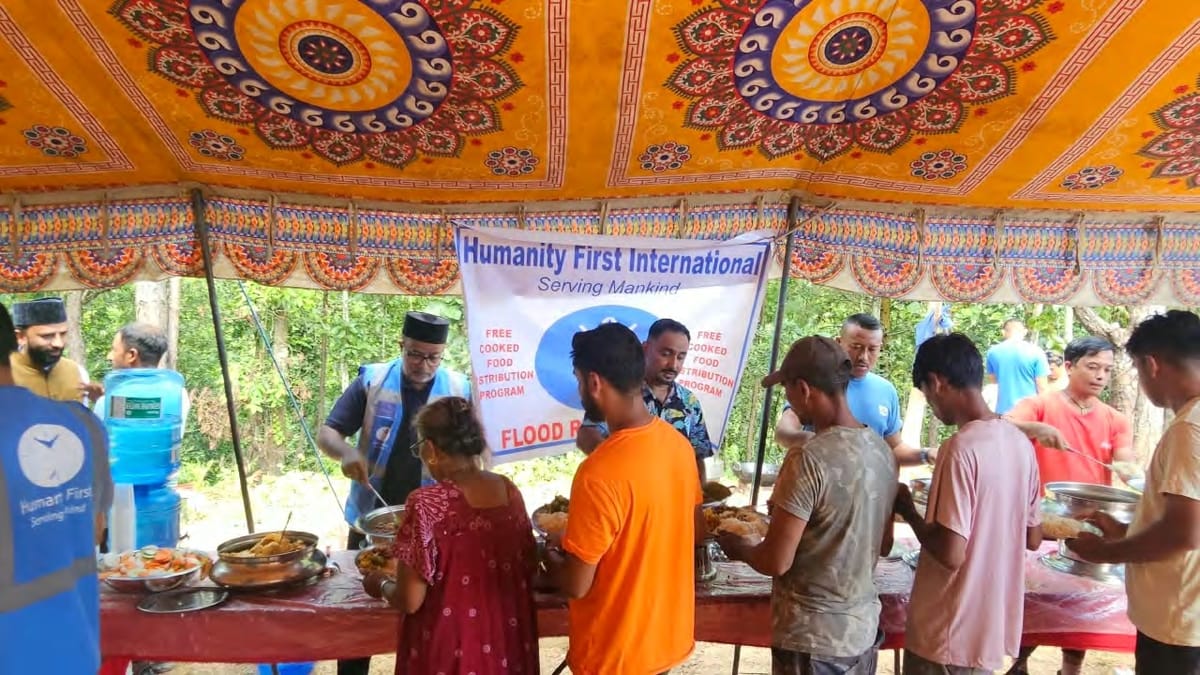
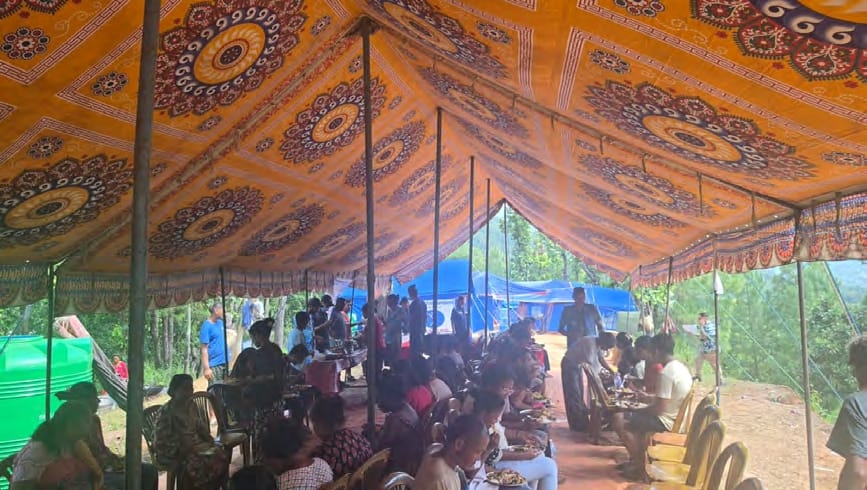
In Dhading the flood had destroyed families’ means of cooking, and many were living in temporary government tents. We set up a community kitchen there and served hot meals to more than 400 people.
A free medical camp
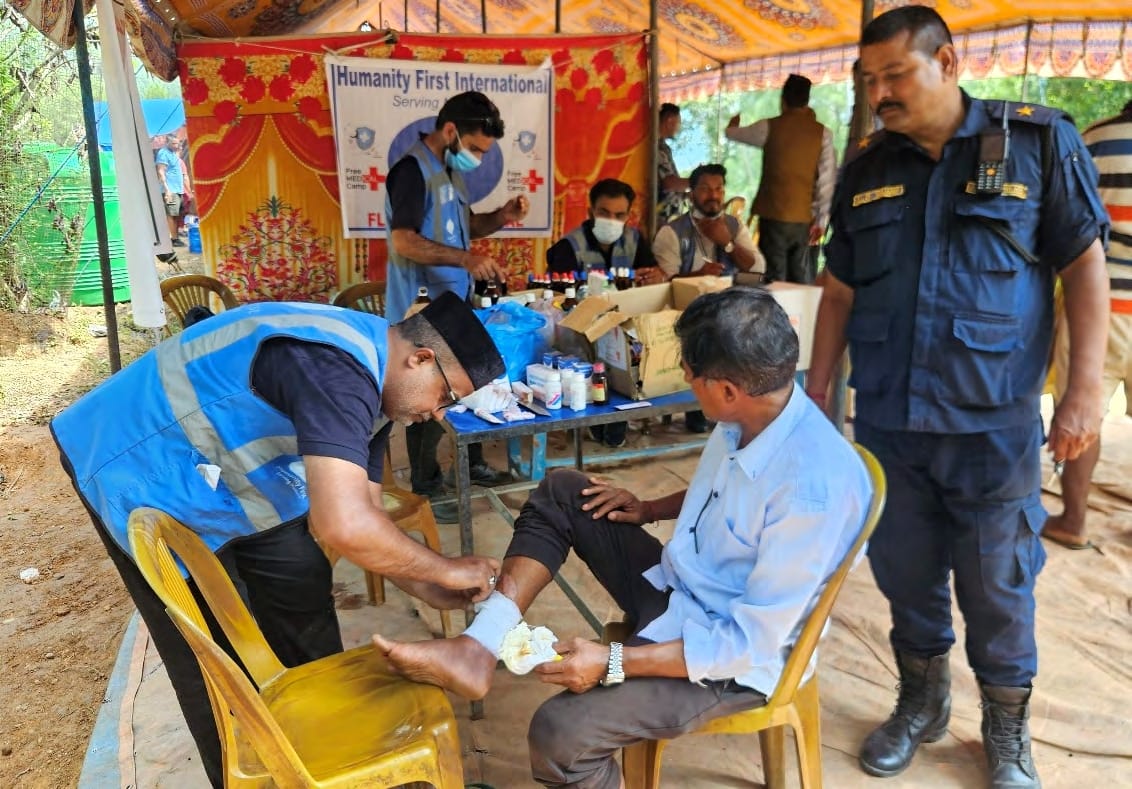
The team ran a free medical camp in Dhading, where patients were examined and treated, and a representative of the district’s government health office attended. Families in the temporary tents also received 50 medical kits with hygiene supplies, and a further 150 medical and hygiene kits went to families in Nuwakot.
Clearing the debris
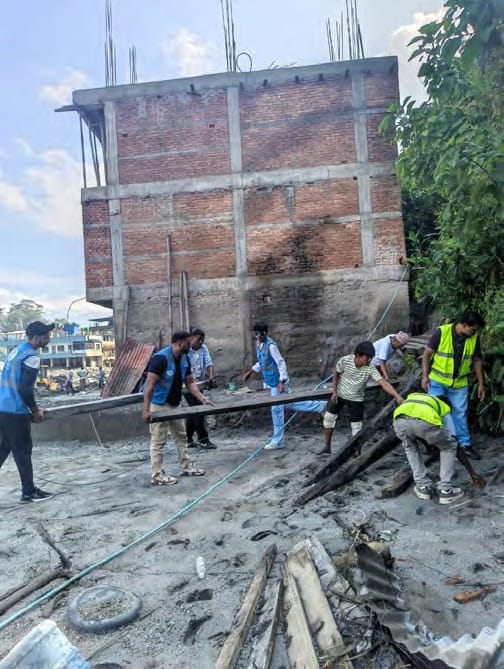
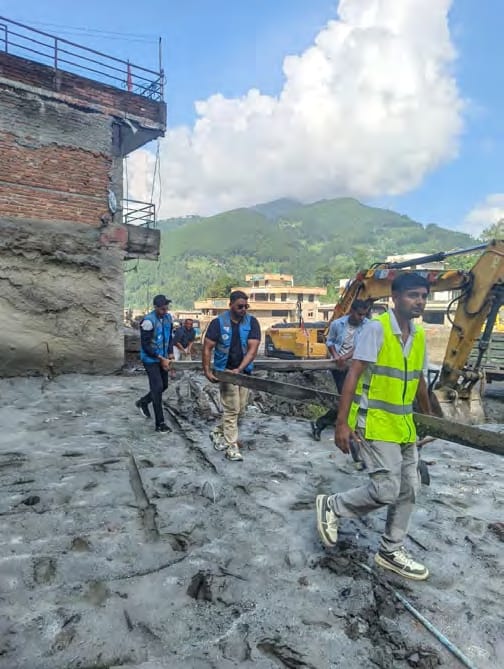
The flood left the ground around homes in Trishuli and Devighat covered in grey silt and broken timber. Seven volunteer teams spent three days helping families clear the debris from their houses.
Working with the authorities
All the relief work was approved by Nepal’s Social Welfare Council, the government body responsible for NGO activity in the country, and carried out under its guidance. District police helped us decide where to hold the distributions, and in Dhading the Deputy Superintendent of Police stayed with the team to help choose the sites.
The district’s Superintendent of Police told us he had looked Humanity First up online before meeting the team, and had read that we’ve been working since 1995. He offered his help with any relief work we do there in future.
Our partners in Nepal also gave 600,000 Nepalese rupees to the Prime Minister’s Disaster Relief Fund, handing the cheque to the Finance Minister, Dr Swarnim Wagle, on 3 September.
How you can help
Two hundred families is a small share of the people this flood reached. At the end of August the UN counted at least 93,000 people affected. Donations to our disaster relief fund are what let our teams respond when a disaster like this strikes.
Help our teams reach families in the first days after a disaster.